Get Free Ebook Coming of the Kingdom
Subsequent what we will use in this post about Coming Of The Kingdom You know truly that this book is coming as the most effective vendor book today. So, when you are truly an excellent visitor or you're fans of the author, it does will be funny if you don't have this publication. It suggests that you have to get this book. For you who are beginning to discover something new and also really feel curious regarding this book, it's simple after that. Just get this book and also really feel just how this book will certainly give you more interesting lessons.
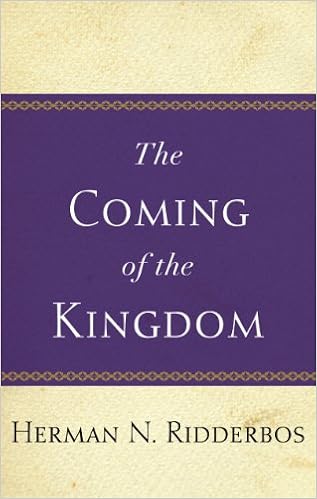
Coming of the Kingdom

Get Free Ebook Coming of the Kingdom
Locating one publication to be the accurate publication to read from countless publications in the world is at some time complicated. You might have to open and also look lot of times. And currently, when discovering this Coming Of The Kingdom as just what you really want, it's like discovering oasis in the dessert. In fact, it is not regarding the writer of this book or where this publication originates from. Occasionally you will certainly require this publication since you really have the commitment to obtain or have the book.
various view. Yeah, this book overcomes a new thing that will not just influence, but additionally improve lesson and also experience. Having this Coming Of The Kingdom, even as soft data, will prove that you have joint to be one of the hundreds visitors in the world. Yeah, you're one part of the excellent people who like this book.
When you wish to read it as part of activities in your home or workplace, this documents can be likewise kept in the computer or laptop computer. So, you could not have to be stressed over losing the printed publication when you bring it somewhere. This is just one of the best reasons you have to choose Coming Of The Kingdom as one of your reading products. All very easy way colors your tasks to be less complicated. It will also lead you in making the life runs much better.
The options of words, dictions, and just how the author communicates the message and lesson to the visitors are extremely easy to understand. So, when you feel bad, you might not believe so hard regarding this publication. You can appreciate as well as take a few of the lesson offers. The everyday language usage makes the Coming Of The Kingdom leading in experience. You can figure out the way of you making correct statement of reading design. Well, it's not a simple difficult if you truly do not like reading. It will be worse. However, this publication will certainly guide you to really feel various of exactly what you could really feel so.
This volume is a monumental study of the preaching of Jesus according to the synoptics. It is a veritable treasure house of informative and stimulating exegesis of large segments of the synoptic texts. Special mention may be made, by way of illustration, of the illuminating and helpful discussion of the parables and of the apocalyptic discourse of Mark 13.When Ridderbos concludes that the kingdom of God involves both a present and a future aspect, nothing especially startling is disclosed. But the author's treatment of this subject wins unqualified admiration when one takes account of the manner in which, in the context of a thorough and minute examination of the arguments of the representatives of "consistent eschatology" and "realized eschatology," he surveys the pertinent data and evaluates the issues with exceptional exegetical ability. No one perhaps has approached him in the comprehensiveness of the treatment of this matter. And the discussion in this connection of such subjects as the kingdom in relation to Satan's defeat and preset working, the miracles as present power and as signs of the future, the parables, and the integration of Jesus' ministry with the coming of the kingdom is highly rewarding.Ned B. Stonehouse, Late Professor of New Testament, Westminster Theological Seminary
Your recently viewed items and featured recommendations
›
View or edit your browsing history
After viewing product detail pages, look here to find an easy way to navigate back to pages you are interested in.
Product details
Paperback: 588 pages
Publisher: P & R Publishing (June 1, 1962)
Language: English
ISBN-10: 9780875524085
ISBN-13: 978-0875524085
ASIN: 0875524087
Product Dimensions:
5.8 x 1.5 x 8.5 inches
Shipping Weight: 1.4 pounds (View shipping rates and policies)
Average Customer Review:
4.9 out of 5 stars
9 customer reviews
Amazon Best Sellers Rank:
#209,020 in Books (See Top 100 in Books)
Ridderbos gives us an in-depth examination of the key features of Jesus' teaching on the kingdom of God (which came to us by virtue of His incarnation) and its promise (our full entrance into it at His coming again). For a Christian, the fulfillment and the promise of the kingdom of God is one of the most difficult concepts to wrap our minds around even though we live it from day to day. Ridderbos does a masterful job of addressing those theologians who would muddle the concept and debunking their lukewarm theories as well as forcefully expounding on the Biblical teaching that clarify Jesus' teaching on the kingdom.Ridderbos' work is much to be recommended for the uplifting of soul and mind as Christians ponder our unique life in the kingdom of God through Jesus Christ.
When studying the Kingdom of God, I go to Ridderbos quite often. Great work.
Very well written and a very good read.
Herman Nicolaas Ridderbos (1909-2007) was a pastor and theologian in the Reformed Church in the Netherlands, and taught New Testament at the Theological School of the Reformed Churches of the Netherlands. He wrote many other books, such as When the Time Had Fully Come: Studies in New Testament Theology,Paul: An Outline of His Theology,The Epistle of Paul to the Churches of Galatia, etc.He states, "The first thing to do is to establish that there is no material difference between the terms 'kingdom of heaven' and 'kingdom of God.' Mark alone makes use of the latter combination... Matthew ... uses the phrase 'the kingdom of God' only a few times... Almost everywhere else he uses 'the kingdom of heaven.'" (Pg. 18-19)Of the interpretation of Matthew 16:17-18, he says, "many Protestant exegetes have considered that by the words 'this petra,' it was not the person but the faith, the confession or the office of Peter that was meant... In our opinion such explanations are far from convincing. The use of the word 'petra' can be best explained by consulting the original meaning of the word... The most natural view is that 'petra' is simply a repetition of 'petros.' Here, Christ certainly means Peter himself." (Pg. 358-359)On the dating of the Last Supper, he says, "The historical objection must, therefore, be reduced to the description that John seems to give in 19:14 and in 18:28, to the effect that on the day of Jesus' death the paschal meal had still to be eaten... we are here confronted with one of the most difficult questions about the relation between the synoptics and John... From a historical point of view there is, in our opinion, no other way in the discussion of the synoptic account than to start from the assumption that the institution of the Lord's Supper took place DURING THE PASSOVER MEAL." (Pg. 421, 423)Of Jesus' apocalyptic discourses (Mt 24:15-, Mk 13:14-, Lk 21:20-), he observes, "the way in which Matthew and Mark speak of the cause of the coming tribulation is much less concrete and much more concerned with the desecration of the holy of holies than is Luke who... speaks of the siege of Jerusalem... we must emphaticallly maintain that what is said in Mark and Matthew about these events was not at all realized completely in the fall of Jerusalem. For it is questionable whether the description of the 'abomination of desolation' can be considered as exhaustively fulfilled by the destruction of the temple in A.D. 70... Luke does not mention the 'abomination of desolation' but speaks of the seige of Jerusalem. And in Luke the tribulation does not have the eschatological coloring that it has in Matthew and Mark... There is only one way in which we may explain this, and that is the coalescence of two motifs in Matthew and Mark... The question as to whether or not Luke's greater distinctness about these things is to be explained in a similar way... must be left undecided." (Pg. 493, 495-496)This is an excellent commentary on many themes of the gospels, and will be of interest to most Christians---not just with a Reformed background---studying the gospels.
'The history of salvation is the heart of the New Testament kerygma.'p xxiiiGerman liberal theology had shown an upsurge in eschatological analyses when Ridderbos re-stated the authenticity of Scripture. Especially the Gospel narratives had come under intense scrutiny and criticism by anti-supernaturalists. Of course, as the obvious title (and quote above) to this present volume implies, they have to be rejected. The claims of Jesus, Ridderbos will show, take precedence over everything else.To the future revelation of kingly glory Ridderbos attached certain provisos:'The kingdom of God is not a state or condition, not a society created and promoted by men. It will not come through an immanent earthly evolution, nor through human moral action; it is not men who prepare it for God. The kingdom of heaven is, therefore, absolutely transcendent in its origin, it is the revelation of God's glory. Viewed from the human standpoint, therefore, the kingdom of heaven is in the first place something to keep praying and waiting for with perseverance.' p 24In opposition to every kind of metaphysics, Ridderbos believes the revelation of the kingdom is the revelation of Christ, thereby emphasizing the christological character of the evangelical message. The incarnation led to the proclamation which led to the realization. 'The manifestation of the kingdom of heaven cannot be conceived as an impersonal metaphysical event, but the coming of God Himself as king. This conception is borne out by a whole series of parables about the kingdom of God.' p 25 The stage is set for a redemptive-historical supremacy in hermeneutics by doing justice to both the eschatological view and the present character of the kingdom. 'On the other hand, the parables indicate the special veiled way in which the kingdom has come. The wisdom offered in it, the mysteries revealed in it, are only knowable to those who have been privileged to understand the fundamental truth: the coming of the kingdom in Christ.' p 127Much modern exegesis equates Israel's rejection of their Messiah as a postponement of the coming of the kingdom, yet both John the Baptist and then Jesus Himself proclaimed that the kingdom of God was at hand in the person of Christ the Messiah. To be sure, New Testament writers linked the coming of the kingdom with the first advent of our Messiah. 'We have seen that the Old Testament most often speaks of its coming as the coming of a person. The same observations hold for Jesus' use of the word "basileia". Until now we have translated it as kingdom, but in Greek it may mean kingship, kingly dominion, and kingdom. There is no doubt that the former sense, especially that of dominion as the exercise of royal dignity, is the most prominent usage of the word in various central pronouncements.' pp. 24-25 "Rabbi, You are the Son of God! You are the King of Israel!" exclaimed Nathanael.Moreover, Ridderbos cautions us not to forcibly narrow the meaning of the kingdom by absolutizing only a certain aspect at the expense of others. 'It may not for a moment be doubted that John saw the Messiah in Him. Nor is there any doubt possible that John's description of the Messiah's importance passes far beyond the nationalistic Messiah-ideal, and is entirely dominated by the thought of the transcendent and universal judgment which will attend the appearance of the coming king.' p 29 It is not to be exclusively restricted to the perspective of the restoration of Israel and the subjugation of her enemies.'In Col 2:15 Paul speaks of the conquest of the principalities and powers as having in principle been accomplished in the cross of Christ. In Rom 8:38-39 he assumes that even now Christ so reigns over and controls death and life, and principalities and powers, as to preclude every separation of the Christian from the love of God in Him.' Geerhardus Vos, The Pauline Eschatology p 245Conversely, Ridderbos cautions 'Yet it should not be conceived of as exclusively future. Again and again it appears that the salvation of the kingdom is assigned to the disciples and the faithful in general as a present reality. To Zacchaeus of Jericho Jesus says with great emphasis: "This day is salvation come to this house." (Luke 19:9) The 'receiving' of the kingdom must needs be understood as something that precedes the 'entry' into it.' p 79 Central to the messianic mission of the incarnate Redeemer, Ridderbos asserted that 'The evangelists want to indicate that Jesus' word and work revealed the absolute, the supernatural, and the divine in such a way that even the multitude could not but be aware of it.' p 74An illuminating study on the already-and-not-yet character of the kingdom is realized here. The persistent interpolation in Ridderbos' work between the coming of the kingdom in Christ, and its future coming in glory, Ridderbos ontologically interrelates as 'the fact that the final coming of the kingdom of God is entirely based on God's action.' p 146 The reader evokes much comfort from the fact that Ridderbos, who was highly familiar with Scripture, did not impose his own theory or ideas, but remained conscious of letting the Word speak for itself, as if he were determined to fix his mind, heart and strength exclusively on the Lord Jesus Christ. Only this can account for why Ridderbos invests in this monumental study so much attention to the testimony of the synoptic gospels.'There can be no doubt that in Jesus' preaching the great future perspective has been maintained. So every conception that the kingdom of heaven is an exclusively religious-ethical good, a spiritual community or a social order within the limits of this world is in open conflict with the gospel.' p 43
Coming of the Kingdom PDF
Coming of the Kingdom EPub
Coming of the Kingdom Doc
Coming of the Kingdom iBooks
Coming of the Kingdom rtf
Coming of the Kingdom Mobipocket
Coming of the Kingdom Kindle