Get Free Ebook Sleep: A Very Short Introduction
By just attaching to the web and also locate the link that we always give in every page, you can subsequent the book to obtain. They remain in the soft data programs. Currently, we will introduce you Sleep: A Very Short Introduction as an analysis publication today. We are actually certain that this book will be truly significant for you as well as people around you. As many people in various other locations, they have taken this book as their analysis collection. So, we suggest to you to obtain additionally this publication.
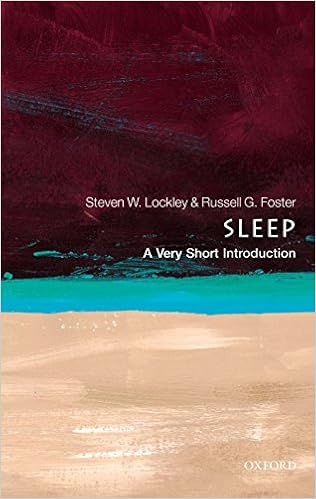
Sleep: A Very Short Introduction

Get Free Ebook Sleep: A Very Short Introduction
Do you believe that reading is a crucial activity? Discover your reasons including is important. Checking out a publication Sleep: A Very Short Introduction is one component of delightful activities that will make your life high quality much better. It is not concerning simply what type of e-book Sleep: A Very Short Introduction you review, it is not just about exactly how several books you read, it has to do with the behavior. Checking out habit will certainly be a method to make e-book Sleep: A Very Short Introduction as her or his buddy. It will certainly no matter if they invest cash as well as invest even more books to complete reading, so does this e-book Sleep: A Very Short Introduction
If Sleep: A Very Short Introduction is one of the options to read guide, you could follow just what we will certainly inform you now. Locating guide might require more times when you are looking from shop to shop. We have brand-new way to lead you get this publication rapidly. By visiting this web page, it becomes the firsts step to obtain the book carefully. This page is type of internet library that offers so numerous book collections.
Appropriate really feels, appropriate facts, and also appropriate topics might become the factors of why you review a book. However, making you really feel so completely satisfied, you can take Sleep: A Very Short Introduction as one of the resources. It is really matched to be the analysis publication for someone like you, that actually require resources about the subject. The topic is actually growing now and obtaining the latest book can aid you discover the most recent response and also realities.
This is exactly what you should do in needing what exactly we provide. This is not nonsense, this is something to develop better idea. Basically, publication will not always influent somebody to act and assume much better. It will certainly depend on exactly how individuals will gaze as well as consider the lesson provided by the book. Yet, when you have actually handled reviewing the book arranged, the Sleep: A Very Short Introduction will have no matter to call for.
Why do we need sleep? What is sleep? What happens when we don't get enough? This Very Short Introduction addresses the biological and psychological aspects of sleep, providing a basic understanding of what sleep is and how it is measured, a look at sleep through the human lifespan, and the causes and consequences of major sleep disorders. The book describes dramatic breakthroughs in our knowledge of how sleep occurs, what it does, and what happens to our health if we do not have enough. The authors consider the impact of modern society, examining the relationship between sleep and our 24/7 culture.
Your recently viewed items and featured recommendations
›
View or edit your browsing history
After viewing product detail pages, look here to find an easy way to navigate back to pages you are interested in.
Product details
Paperback: 168 pages
Publisher: Oxford University Press; 1 edition (March 24, 2012)
Language: English
ISBN-10: 9780199587858
ISBN-13: 978-0199587858
ASIN: 019958785X
Product Dimensions:
6.7 x 0.5 x 4.4 inches
Shipping Weight: 5 ounces (View shipping rates and policies)
Average Customer Review:
4.1 out of 5 stars
17 customer reviews
Amazon Best Sellers Rank:
#548,024 in Books (See Top 100 in Books)
I went on a little reading binge on books about sleep. Understandably, they covered a lot of the same material (but not exactly the same) and each one had a distinctive style to it. For comparison here are the books I read (in order):1) The Secret World of Sleep: The Surprising Science of the Mind at Rest by Penelope A. Lewis2) Dreamland: Adventures in the Strange Science of Sleep by David K. Randall3) Sleep: A Very Short Introduction by Steven W. Lockley4) The Secret Life of Sleep by Kat DuffI was looking mainly for scientific information, in conjunction, perhaps, with interesting anecdotes. Dreamland by David Randall was the closest to what I thought I was looking for and I highly recommend it for anyone interested in sleep. The Secret World of Sleep by Penelope Lewis and Sleep: A Very Short Introduction by Lockley and Foster were a little more purely scientific. However, among these two I strongly preferred the no-nonsense style of Sleep: A Very Short Introduction. By comparison, The Secret World of Sleep felt like an academic paper that had been hastily modified by a copy-editor to read like a popular science book. The result is not-very-exciting writing that is larded with "accessible" descriptions and analogies. The amygdala is referred to at least a dozen times by the epithet "almond shaped". The first time was fine, the fifth time was patronizing. But I powered through.I cannot recommend Kat Duff's book, because of passages that give serious credence to the explanation that hypnogogic hallucinations are in fact visitations by evil spirits. See my review there for more details.The best thing about this book is how succinct it is. I suggest reading it along with (before or after) the David Randall book.
This is one book in a large series of books put out by the Oxford University Press. All of these “Very Short Introduction†books are brief summaries of the state of research on a given topic in the arts, sciences, or humanities. Based on this book, I’d say the series is geared toward a readership of educated non-specialists. I say “educated†because the book did get into some technical areas, and while it doesn’t presume any particular knowledge of the science of sleep, it does use a scientific vocabulary with occasional academic sentences (i.e. packed with precise detail and lacking concern about readability.) That said, I’d say the readability is higher than the journal articles from which the information for the book was drawn. I suspect I’ll read more from this series. They are cheap on Kindle, provide a concise injection of the basics for a wide range of topics, and are pleasantly readable if you’re used to reading academic literature.This particular book is about sleep. While, on average, sleep takes up one-third of a person’s life, it’s a subject that is often taken for granted. Like water, one doesn’t really think about it until one isn’t getting enough. However, as the book discusses in detail, all sorts of problems are associated with sleep deprivation, insomnia, and parasomnias (i.e. sleep events like sleepwalking, night terrors, nightmares, bedwetting, sleep-eating, and groaning.)The book is written in nine chapters covering: the history of sleep, sleep generation and regulation, a brain on sleep, reasons we sleep, variation in sleep throughout one’s life-cycle, the nature of poor sleep, the connection between sleep and health, and the effect of our shift to a round-the-clock society.There are a number of fascinating questions addressed by this book including: -What does sleep do for us? -Have people always tended to sleep eight hours per night? -Why are some people morning people and others night owls? -Why does one feel drowsy after lunch, but not necessarily when it’s time to hit the sack? -How long can one go without sleep? -Do all animals sleep? -How do sleep and hibernation differ? -Why do teenagers and the elderly have such odd (but different) sleep habits? -Why do people sleepwalk, sleep-eat, groan in their sleep, or have night terrors? -What is the effect of long-term insomnia on health? -What happens to sleep if one has no rising and setting sun cues? -What is jetlag and how can one fight it?I learned some interesting facts, such as: -On average, women report more insomnia, but, paradoxically, tend to sleep better than men.-Pre-industrial people slept for about 10 hours a night on average, it’s believed.-Many parasomnias occur mostly during REM (Rapid Eye Movement) sleep.-The government can deprive prisoners of sleep for 7.5 days without it being considered torture (then they have to allow a full 8 hours sleep before another 7.5 day period started.)-Long-term insomnia has been linked to heart-disease.-Shift workers have a 50% greater incidence of breast and prostate cancer than day-workers.-Visiting teams win 46% of the time if they are in their home time zone, 44% if they are traveling ‘with their body clock,’ and only 37% if they are traveling against their body clock.I found this book interesting and informative. However, there are many books on the subjects of sleep and dreams that are more catered to a popular audience. Such books delve into intriguing cases and don’t dig as deeply into the minutiae of the science of the subject. I’d recommend this book, but not for readers who get bogged down or bored with scientific and technical discussions. If you’re looking for a book that’s loaded with pithy facts and fascinating stories, you can find a book closer to the mark by journalists who focus on science writing and who’ve got more flare for creative writing.
The author reveals through thorough but extremely concentrated prose why sleep is far more important than we would like to believe. I felt this book was utterly informative, but personally, I like a bit more eloquence, story, and sense of style and art to shape and give life to what is otherwise just raw and somewhat boring data to those of us who don't have apple products for brains. Not really a fan of the new trend of removing all passion and feeling from information. The author isn't a bad writer, but the language is simply too concentrated and heavy. It would be much more interesting if the author had or had been given more freedom in this work. Then again, I'm not a scientist or a doctor, just a person who likes to learn. I would rather read a book ten times in length that was presented in a more digestible form. Still, you can't knock this book for it's heavy dosage of information, and I appreciate that the author has the guts to make controversial statements based on relatively sound argument. I agree with him about drowsy driving, in particular. If you can stomach non-fluidity of the language, this book could save your life.
I am not a sleep medicine professional, but a non sleep medicine professional, i.e. medical researcher who wants to get to speed with sleep medicine to study related phenomena in my field.I have mostly been reading Czeisler's excellent Cold Spring Harbor lecture, and wanted something more detailed.I found this book by searching for some of the major authors who pioneered sleep studies (and was also available on kindle).In short, it is very well written, relatively up to date, and sufficient as something you can wet your feet with.It helped me get up to speed to read more recent research, and I believe that is what this book aims for, and what many of you who have searched for appropriate books that are a bit more sophisticated than the common text book are looking for.
Sleep: A Very Short Introduction PDF
Sleep: A Very Short Introduction EPub
Sleep: A Very Short Introduction Doc
Sleep: A Very Short Introduction iBooks
Sleep: A Very Short Introduction rtf
Sleep: A Very Short Introduction Mobipocket
Sleep: A Very Short Introduction Kindle